
G7 Summit 2026: Complete Guide to the Group of Seven, Its History, Purpose, Agenda, and Global Impact
admin
संपादकीय टीम

Introduction
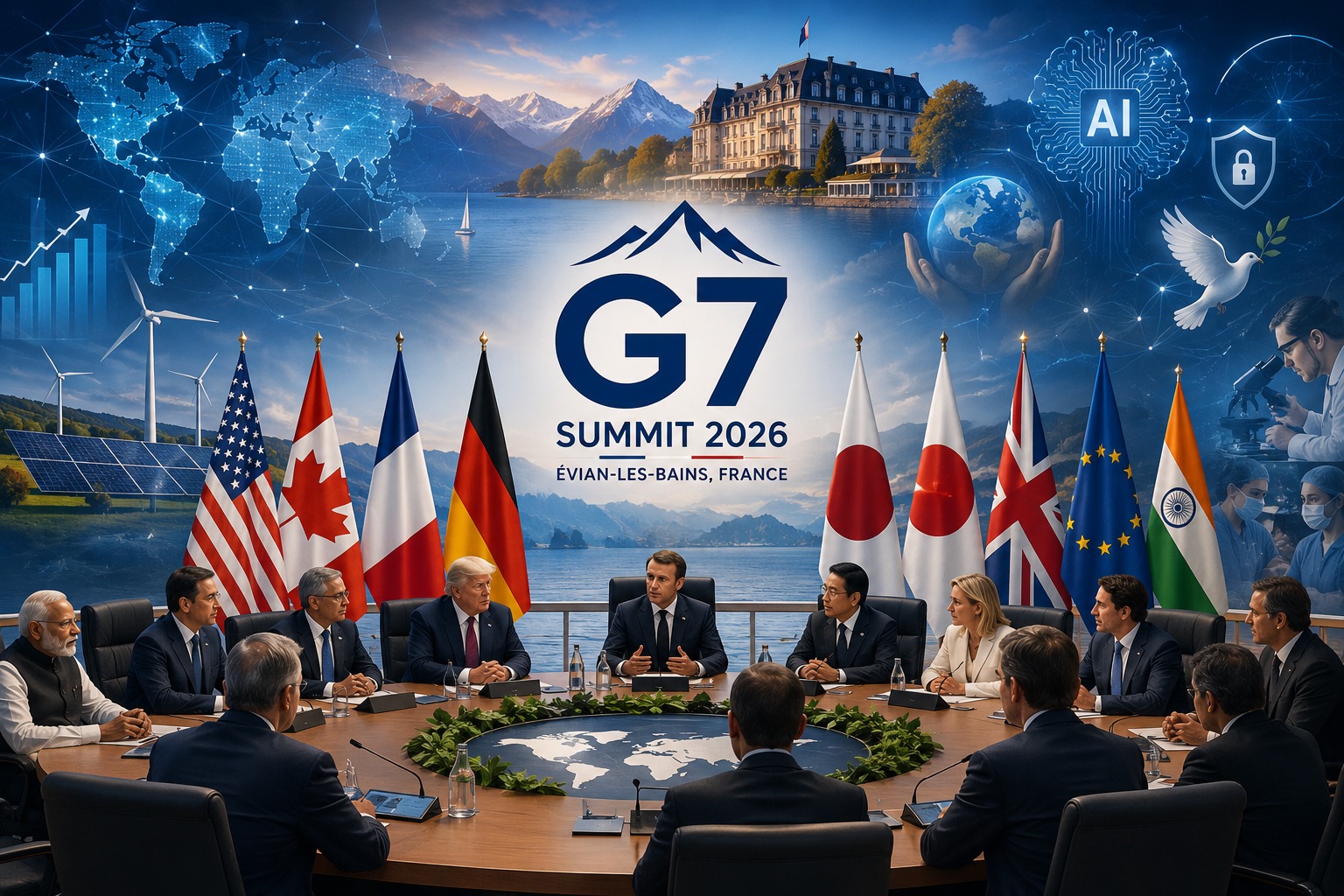
The G7 Summit is one of the world’s most influential gatherings of political leaders. Every year, the heads of government of the world’s leading advanced economies meet to discuss major global challenges, ranging from economic growth and international security to climate change, artificial intelligence, trade, health, and geopolitical conflicts.
In 2026, France hosted the 52nd G7 Summit in Évian-les-Bains, a picturesque town on the shores of Lake Geneva, from 15–17 June 2026. The summit attracted global attention because of discussions surrounding the Russia-Ukraine war, tensions in the Middle East, artificial intelligence governance, global economic imbalances, debt crises in developing countries, and international security.
What is the G7 ?
The Group of Seven (G7) is an informal forum consisting of seven major advanced democracies:
Canada
France
Germany
Italy
Japan
United Kingdom
United States
The European Union also participates in all major discussions through its institutions. Unlike organizations such as the United Nations or World Bank, the G7 has no permanent headquarters, treaty, or secretariat. It functions through consensus and annual summits hosted by member countries on a rotating basis.
Why Was the G7 Created ?
The origins of the G7 can be traced to the economic turmoil of the early 1970s.
Several major events shook the global economy:
The 1973 Oil Crisis
Rising inflation
Global recession
Collapse of the Bretton Woods monetary system
Energy security concerns
World leaders realized that economic challenges had become interconnected and required coordinated international responses.
French President Valéry Giscard d’Estaing and German Chancellor Helmut Schmidt proposed a small, informal gathering of major industrial democracies to discuss these issues openly.
The Birth of the G7
The G6 (1975)
The first summit took place in November 1975 at the Château de Rambouillet in France.
The original members were:
France
United States
United Kingdom
West Germany
Italy
Japan
This group was initially known as the G6. Leaders focused on:
Economic recovery
Inflation
Energy policy
International trade
Monetary stability
The meeting proved successful and established a framework for annual consultations among major democracies.
Canada Joins (1976)
In 1976, Canada joined the group, transforming the G6 into the Group of Seven (G7).
Canada’s inclusion strengthened North American representation and expanded the forum’s global influence.
The G8 Era
Following the end of the Cold War, Russia gradually became involved in summit discussions.
In 1998, Russia formally joined, creating the G8.
However, after Russia’s annexation of Crimea in 2014, its membership was suspended. Since then, the forum has reverted to the G7 format.
Main Purpose of the G7
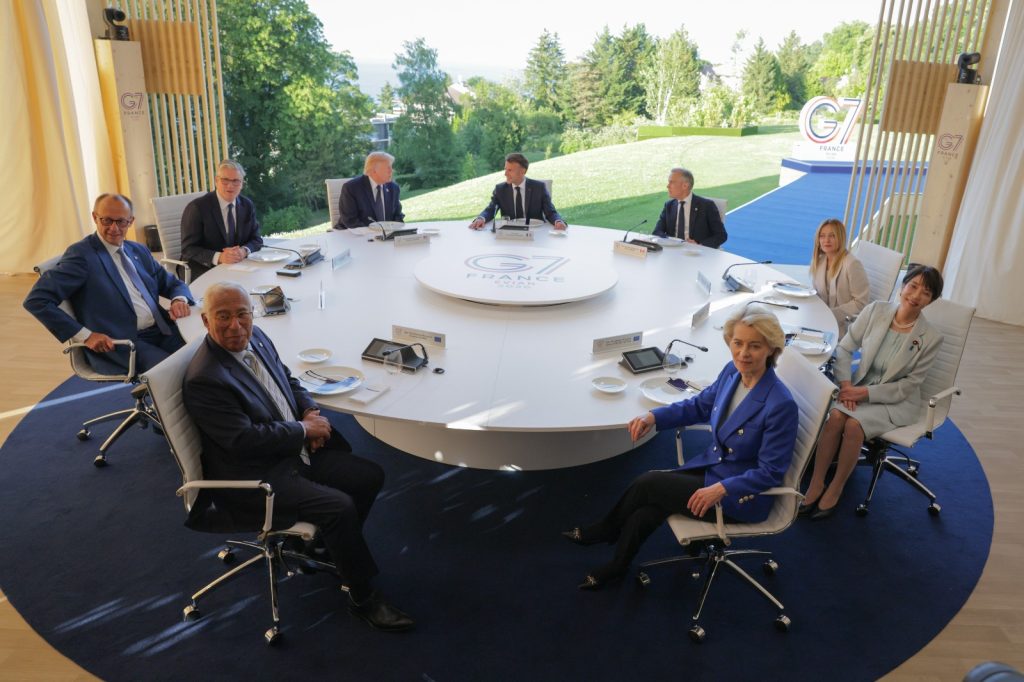
The G7 Summit exists to coordinate policies among the world’s largest advanced democracies.
Its objectives include:
Economic Stability
Preventing financial crises and promoting sustainable growth.
Global Security
Addressing conflicts, terrorism, and geopolitical tensions.
International Trade
Supporting stable and fair global commerce.
Energy Security
Reducing vulnerabilities in energy supply chains.
Climate Action
Coordinating environmental and climate policies.
Technology Governance
Managing emerging technologies such as artificial intelligence.
Global Health
Responding to pandemics and international health emergencies.
Development Cooperation
Supporting poorer and developing countries.
G7 Summit 2026: Why Was It Important ?
France’s 2026 presidency sought to return the G7 to its original mission:
Coordinated responses to major economic and geopolitical challenges facing the world.
President Emmanuel Macron emphasized:
Global economic imbalances
Security threats
Multilateral cooperation
Technology governance
Strategic partnerships with emerging powers
France invited several non-G7 countries, including India, South Korea, Brazil, and Kenya, reflecting the growing importance of emerging economies in global affairs.
Key Leaders at G7 summit 2026
The summit brought together leaders including:
Emmanuel Macron (France)
Donald Trump (United States)
Keir Starmer (United Kingdom)
Friedrich Merz (Germany)
Giorgia Meloni (Italy)
Shigeru Ishiba (Japan)
Mark Carney (Canada)
Invited leaders included:
Narendra Modi (India)
Volodymyr Zelenskyy (Ukraine)
Luiz Inácio Lula da Silva (Brazil)
Lee Jae-myung (South Korea)
Among others.
Full Agenda of G7 Summit 2026
Russia-Ukraine War
Ukraine remained one of the summit’s central issues.
Discussions focused on:
Continued military support for Ukraine
Economic assistance
Additional sanctions against Russia
Long-term European security
Defense industrial cooperation
Leaders reaffirmed support for Ukraine’s sovereignty and territorial integrity. New sanctions targeting Russia’s energy sector were also discussed.
Middle East and Iran
The summit took place amid significant geopolitical tensions involving Iran.
Topics included:
Regional stability
Maritime security
Strait of Hormuz shipping routes
Energy market risks
Nuclear non-proliferation
Leaders sought assurances regarding the security of international energy supplies and trade routes.
Artificial Intelligence (AI)
AI became one of the most discussed subjects.
Technology leaders participating included:
Sam Altman
Demis Hassabis
Dario Amodei
Major discussion points:
AI regulation
Safety standards
National security implications
Cybersecurity risks
Protection of children online
International cooperation on AI governance
France promoted stronger international coordination instead of fragmented national approaches.
Global Economic Imbalances
Leaders examined growing distortions in the global economy.
Issues included:
China’s industrial overcapacity
Trade distortions
Supply chain resilience
Investment gaps
Inflation pressures
France argued that global economic imbalances have become a major source of geopolitical tension and economic vulnerability.
Developing Country Debt Crisis
Many developing nations face heavy debt burdens.
Discussions covered:
Debt restructuring
Development financing
Economic resilience
International lending reforms
The issue has become increasingly important as rising interest rates strain poorer economies.
Critical Minerals and Energy Security
Governments discussed securing access to:
Lithium
Rare earth elements
Nickel
Cobalt
These materials are essential for:
Electric vehicles
Batteries
Renewable energy technologies
Advanced electronics
Reducing dependence on vulnerable supply chains became a key objective.
Health and Cancer Research
For the first time, cancer prevention and treatment became a major G7 priority.
Leaders explored:
Research collaboration
Early detection technologies
Access to treatment
Medical innovation
The summit also issued health-related declarations addressing international cooperation.
Global Health Security
Leaders discussed preparedness for future health emergencies.
Topics included:
Disease surveillance
Pandemic readiness
Ebola response mechanisms
International coordination
A coordinated response to the Bundibugyo Ebola outbreak was among the summit’s official initiatives.
Migration and Human Trafficking
France pushed for stronger action against:
Human smuggling networks
Illegal migration routes
Organized criminal groups
Leaders adopted declarations addressing migration-related challenges.
Drug Trafficking and Organized Crime
Another major security topic was transnational criminal activity.
Discussions focused on:
Narcotics trafficking
Criminal networks
Border security
International law enforcement cooperation
Joint declarations were issued on combating drug trafficking.
India’s Role at G7 2026
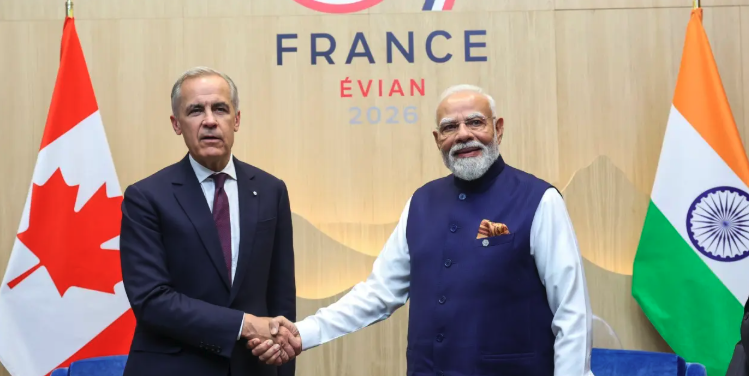
India was invited as a key partner nation.
India’s importance stems from:
Fast-growing economy
Strategic role in Indo-Pacific security
Technology sector leadership
Digital public infrastructure
Supply-chain diversification
Prime Minister Narendra Modi participated in discussions related to technology, global growth, trade, and geopolitical stability.
Major Outcomes of the Summit
The summit produced several important declarations and joint statements covering:
International partnerships
Ukraine support
Global health initiatives
Cancer research cooperation
Migration and anti-smuggling measures
Drug trafficking prevention
AI governance discussions
Economic stability initiatives
These declarations reflected the G7’s effort to coordinate responses to both immediate crises and long-term structural challenges.
Criticism of the G7
Despite its influence, the G7 faces criticism.
Common concerns include:
Limited Representation
Many major developing countries are not permanent members.
Lack of Binding Authority
The G7 cannot enforce decisions like a treaty organization.
Western-Centric Perspective
Critics argue that the forum primarily reflects the interests of advanced Western economies.
Competition from New Forums
Organizations such as the G20 increasingly represent a broader range of global economic powers.
Conclusion
More than fifty years after its creation in response to the oil crisis and global economic instability, the G7 remains one of the most influential forums in international politics. The 2026 Évian Summit demonstrated how the group’s focus has expanded far beyond economics to encompass security, artificial intelligence, health, migration, energy, and global development.
While the G7 no longer represents the entire global economy on its own, it continues to shape international policy discussions and often sets the direction for broader global cooperation. As geopolitical competition intensifies and technological change accelerates, forums like the G7 remain central to how the world’s leading democracies coordinate their responses to emerging challenges.